It cannot prove permission
A generated voice may resemble a person, but the interface alone cannot establish that the source voice was supplied with consent.
Workaround
Keep records of ownership, permission, and intended use before publishing.
Independent review
This fish audio review ai voice generator guide separates observable workflow choices from assumptions. It explains how to assess the product, its output, and its trust signals without treating polished demos as proof.
Before AI voice tools became common, creating a convincing spoken track usually required a human recording session, editing software, and repeated takes.
A script was finalized first, with pronunciation notes, pauses, emphasis, and alternate lines marked for the speaker.
A voice actor or narrator recorded the material in a controlled space, often repeating sections to correct timing or delivery.
An editor removed mistakes, balanced levels, arranged takes, and sent a finished file for review before publication.
A modern AI voice workflow compresses preparation, generation, and revision into one interface, but the quality of the result still depends on the input and the review process.
Starting material
Traditional recording
A script, performer, and recording setup
AI voice workflow
A script plus a selected or created voice
First output
Traditional recording
Recorded performance
AI voice workflow
Generated speech preview
Revision loop
Traditional recording
Schedule another take or edit the recording
AI voice workflow
Adjust text, delivery, or voice settings and regenerate
Consistency
Traditional recording
Depends on the performer and session
AI voice workflow
Can be repeated from the same setup, subject to model behavior
Human direction
Traditional recording
Directly shaped during the performance
AI voice workflow
Shaped indirectly through text and available controls
Trust review
Traditional recording
Identity and permission are usually visible in the session
AI voice workflow
Requires checking source, consent, use rights, and platform policies
Best fit
Traditional recording
High-touch, distinctive, or sensitive performances
AI voice workflow
Drafts, narration, character tests, and repeatable voice work
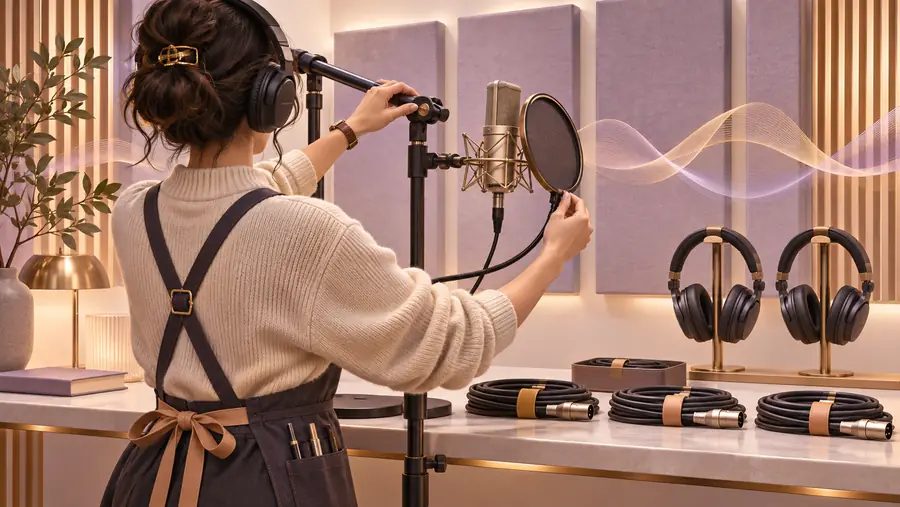 Manual production
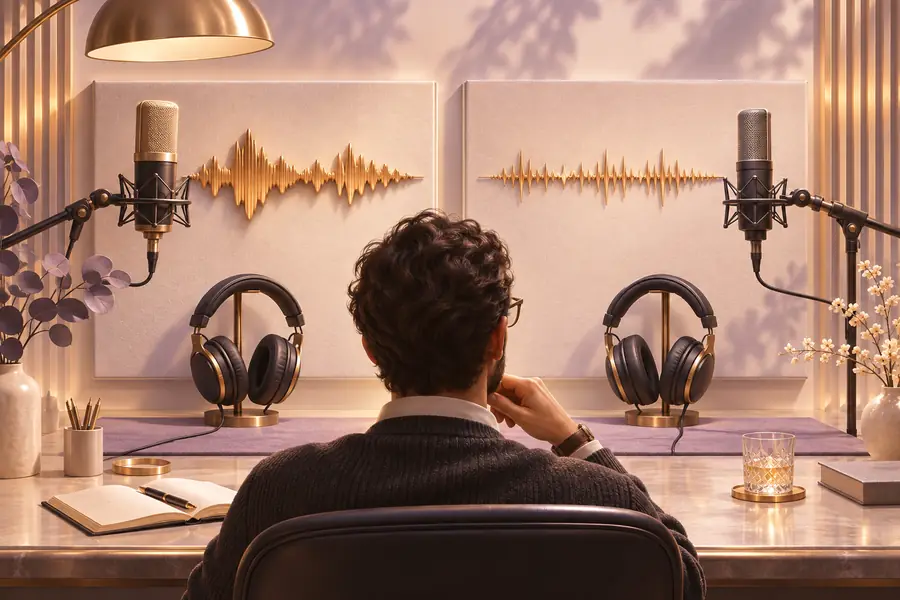 AI-assisted production
The meaningful change is not that every generated voice is automatically better. It is that testing, iteration, and localization can happen earlier, while responsibility for the final result remains with the user.
A generated voice may resemble a person, but the interface alone cannot establish that the source voice was supplied with consent.
Workaround
Keep records of ownership, permission, and intended use before publishing.
A fluent result can still mispronounce names, flatten emotion, or sound wrong for the audience and context.
Workaround
Listen to complete passages and have a human reviewer check meaning, tone, and pronunciation.
Output may vary with wording, punctuation, language, voice choice, and the controls available at the time of testing.
Workaround
Test representative scripts instead of relying on a short promotional sample.
A product review can describe visible practices, but it cannot independently verify every backend retention or training decision.
Workaround
Read current policies and avoid uploading sensitive material until the terms fit your use.
The strongest candidates are creators who need to explore narration, character voice, or video concepts before committing to a full recording session. A fish audio workflow can also help teams compare drafts quickly, but it should sit inside an approval process rather than replace one. For sensitive identities, regulated content, or a performance that depends on subtle human direction, conventional recording may still be the more dependable choice.
Test a voice workflowTrust should be assessed from current evidence rather than a single review score. Check the site’s policies, contact information, permissions guidance, privacy terms, and the way it explains voice use before sharing sensitive material or publishing generated audio.
It may be useful for drafts, prototypes, narration tests, and repeatable content workflows. Professional suitability depends on the required quality, rights position, review process, and the specific voice output, so test a realistic script before making a production decision.
No. A review can identify visible controls and reasonable checks, but it cannot prove consent for every voice or guarantee every downstream use is lawful. Users still need to verify permission and follow applicable rules.
Start with the current terms, privacy information, voice-source rules, and any stated restrictions on commercial or public use. Then test pronunciation, pacing, emotional fit, and consistency with a script that resembles your intended project.