Fishaudio Create a voice
English

Voice tool comparison

Is a fish audio alternative free enough for your project?

A free entry point is useful, but the better choice depends on how much speech you need, whether you can use the resulting audio, and how long revisions take. Fishaudio offers a practical framework for comparing Fish Audio with another voice workflow without assuming either one will meet every project's needs.

Total-cost table

Start with the work you must finish, not a headline about free access. A usable comparison includes production, revisions and permitted use.

Where quality differs

A fair listening test uses the same script, the same intended audience and comparable recording conditions.

  1. 1

    Write a revealing sample

    Use a short passage from your actual project. Include a name, a number, a question and a sentence that needs an emotional shift. Generic demo text can hide pronunciation problems that become obvious in a finished video or narration.

  2. 2

    Listen without the labels

    Generate comparable samples where each service permits it, then play them at the volume your audience will hear. Note clarity, pauses, emphasis and whether the voice stays consistent from sentence to sentence. A different voice is not automatically a better voice.

  3. 3

    Test one correction

    Change a mispronounced word or awkward pause and produce the line again. Record how much rewriting or editing the correction requires. The most convincing first take may be less useful if routine fixes are difficult to make.

Where time differs

This is a decision table, not a claim that either service has a particular current allowance. Check live terms before putting a project into production.

Fish Audio
Candidate alternative

Getting started

Fish Audio

Check the current access requirements and available voice workflow.

Candidate alternative

Check the candidate's current access requirements and whether its starting workflow fits your task.

Usage allowance

Fish Audio

Verify how much generation your intended access level permits.

Candidate alternative

Verify the actual allowance; a free entry point does not establish capacity for a complete project.

Audio rights

Fish Audio

Read the applicable terms for your intended personal or commercial use.

Candidate alternative

Read the candidate's terms separately, including restrictions on distribution and voice use.

Voice fit

Fish Audio

Test a Fish Audio voice against your real script.

Candidate alternative

Test a comparable voice against that same script and audience.

Revision effort

Fish Audio

Time a corrected line and note any editing outside the service.

Candidate alternative

Repeat the correction; count the time needed to reach a usable result.

Project continuity

Fish Audio

Check whether your preferred voice and workflow remain suitable for later episodes or updates.

Candidate alternative

Check whether the candidate lets you maintain a consistent sound across future revisions.

Total cost

Fish Audio

Add any applicable service expense to script, review and editing time.

Candidate alternative

Use the same calculation; a zero-cost test can still create substantial production work.

When switching is worth it

Compare the workflow you have with the one you would actually adopt, not a polished demonstration with an unfinished draft.

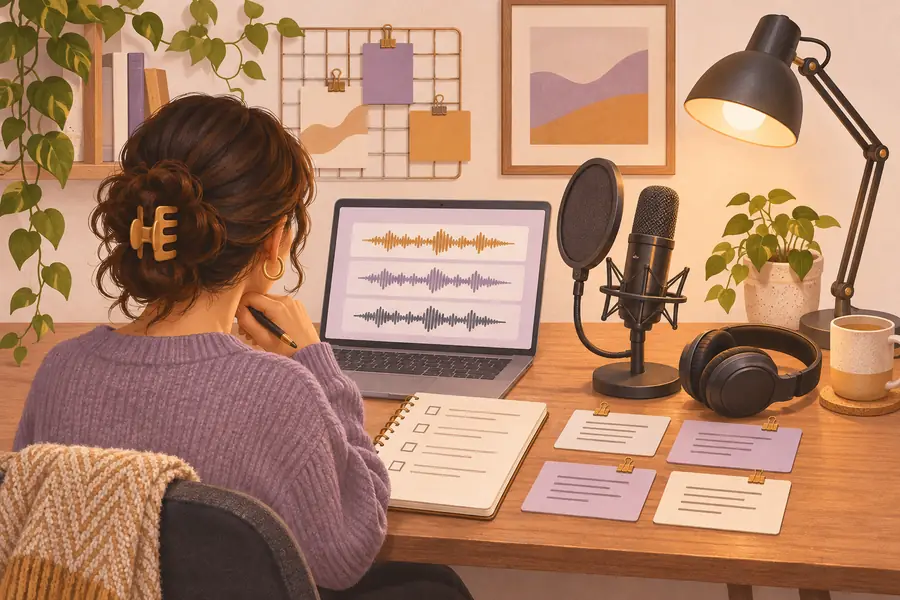
Illustration of a text-to-speech workspace used to plan a voice test Current workflow
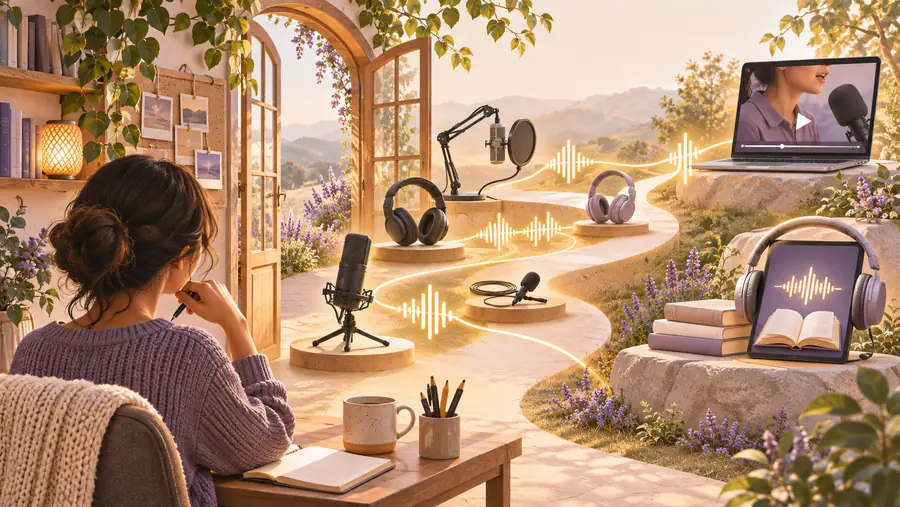
Illustration of a studio voiceover workflow used to review a finished take Candidate workflow
Illustrative workflow images, not screenshots or audio-quality evidence. Switching pays off when a repeatable improvement in usable takes, editing effort or permitted use outweighs the work of moving scripts and reviewing voices.

What a free comparison cannot settle

A short trial can narrow your choice, but it cannot guarantee the conditions under which you will finish and publish.

It cannot confirm today's terms

Access conditions, usage allowances and permitted uses may change. This guide does not state a current price or promise that any tool will remain free for your workload.

Workaround

Read each service's live terms and record the date before starting a project with a deadline.

It cannot rank voices for everyone

A voice that works for a tutorial might feel wrong for fiction or an announcement. Listening preferences also depend on the script and the audience.

Workaround

Compare the same representative passage and ask a reviewer who knows the intended audience.

It cannot replace a rights check

A convincing sample does not establish permission to imitate a person or distribute generated speech. Voice consent and usage terms matter independently of sound quality.

Workaround

Use voices you are authorized to use and confirm the applicable terms for your planned distribution.

It cannot predict every revision

One successful sample may not reveal the effort involved in names, longer passages or last-minute changes.

Workaround

Test a correction and a longer excerpt before committing an entire script.

Choose by usable output

Make your next voice test a fair one

If you are considering a fish audio alternative free to evaluate, bring one real script and a clear definition of a finished take. Compare what you can publish, the corrections you must make and the time those corrections consume. Explore another voice workflow, then judge it against your Fish Audio sample rather than against a marketing demo.

Explore voice options
  • Use the same script for both tests
  • Review current access and usage terms
  • Count revision time as part of the cost

Comparison FAQ

Start with a tool that lets you test the kind of speech your project needs, then check its current access and usage terms. Compare a real script, a corrected line and the work needed to produce a usable take. Do not assume that a free starting point covers your full project.

Not necessarily. A service expense is only one part of the cost; script changes, repeated generation and manual editing also take time. Check current terms for both options and compare the effort required to finish the same piece of audio.

Listen for pronunciation, pacing, emphasis and consistency on the same passage. Then test how easily you can fix an error and whether the applicable terms permit your intended use. A strong demo alone does not answer those production questions.

Consider switching when another workflow reliably produces a better result for your audience, reduces revision work or better fits your permitted use. Run more than one sample before moving a continuing project. Include the time needed to recreate scripts, select voices and review existing material.

That depends on the service's current terms, the voice you use and the kind of publication. Free access does not by itself grant commercial or redistribution rights. Confirm permission and voice consent before releasing the audio.

Create a voice
Create a voice